Live Dental Webinars
(Showing Next 5 Upcoming)
|
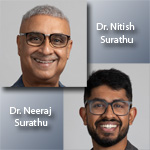
 Digital Implant Surgery: How 3D Printing changes the Guided Surgery Workflow Digital Implant Surgery: How 3D Printing changes the Guided Surgery Workflow
Presenter: Dr. Nitish Surathu and Dr. Neeraj Surathu
Sponsor: Rapid Shape
| Tue |
10/27/26 |
7:00 PM ET
4:00 PM PT
|
| Tue |
10/27/26 |
11:00 PM UTC
|
|
CE Credits: 1 Interactive CEU
|
|
This CE webinar explores how 3D printing is transforming the digital workflow for guided implant surgery, from treatment planning through surgical guide fabrication and implant placement. Participants will learn how to integrate CBCT and intraoral scan data, evaluate implant planning software, and develop predictable treatment plans using digital technology. The webinar will also cover the design, 3D printing, and post-processing of surgical guides and restorations, with a focus on applying guided surgery protocols to improve implant accuracy, efficiency, and patient outcomes.

|
From Inspection to Resolution 2026: Real Cases of How Dental Practices Navigated OSHA Investigations
Presenter: Dr. Karson Carpenter
Sponsor: Compliance Training Partners
| Wed |
10/28/26 |
7:00 PM ET
4:00 PM PT
|
| Wed |
10/28/26 |
11:00 PM UTC
|
|
CE Credits: 1 Interactive CEU
|
|
In this one-hour CE webinar, Dr. Karson Carpenter, president of Compliance Training Partners, will review actual OSHA inspection cases that he and his technical team have been involved with in the last 12 months. The webinar will show actual citations and how the inspection progressed from notification of inspection to onsite visit, receipt of fine, and resolution.
|
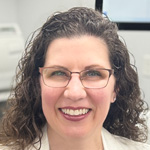
Digital Workflows for Predictable Adult Orthodontic-Restorative Treatment Implementing a Digital Ecosystem
Presenter: Dr. Melissa Shotell
Sponsor: ClearCorrect
| Thu |
10/29/26 |
7:00 PM ET
4:00 PM PT
|
| Thu |
10/29/26 |
11:00 PM UTC
|
|
CE Credits: 1 Interactive CEU
|
|
Adult patients are the largest growing population seeking orthodontic treatment. Many adult patients seek clear aligners as an esthetic alternative to traditional bracket and wire treatment. Yet many adult patients present with complex restorative treatment needs that can be complimented by orthodontic treatment for improved clinical outcomes with interdisciplinary treatment plans. Adult patients require a different patient experience and seek convenient and efficient treatment. The course will cover the basics of aligner design, materials, and mechanical advantages to understand the importance of product selection in complex adult treatment plans. The CE webinar will also explore the digital workflow and digital ecosystem for office efficiency and optimal patient experience. After the webinar, the attendee should be able to evaluate and select an aligner system for complex interdisciplinary cases, and evaluate how to implement a digital workflow for enhanced treatment planning and patient experience.

|
Smarter Smile Design: Align, Whiten, and Restore
Presenter: Dr. Nicholas Garcia
Sponsor: uLab Systems
| Mon |
11/2/26 |
7:00 PM ET
4:00 PM PT
|
| Tue |
11/3/26 |
0:00 AM UTC
|
|
CE Credits: 1 Interactive CEU
|
|
In this CE webinar, join Dr. Nicholas Garcia for a practical discussion on integrating clear aligners into everyday esthetic dentistry - particularly for patients considering whitening, veneers, or other cosmetic improvements. Using a scan-first approach, Dr. Garcia will demonstrate how he evaluates tooth position, spacing, and occlusion before developing a treatment plan. Attendees will learn how to determine when to align, when to restore, and when combining treatments may create a more conservative and predictable path to the desired esthetic outcome. The webinar will provide a straightforward framework for recognizing anterior esthetic aligner opportunities, sequencing complementary services, and confidently presenting comprehensive treatment options to patients.

|
Oral Cancer Screening: It’s More Than Grasping the Tongue
Presenter: Susan Cotten, BSDH, RDH, OMT
Sponsor: VOCO America
| Tue |
11/3/26 |
7:00 PM ET
4:00 PM PT
|
| Wed |
11/4/26 |
0:00 AM UTC
|
|
CE Credits: 1 Interactive CEU
|
|
Both dental hygienists and dentists play an important role in the early detection of oral cancer, yet there is a critical gap in screening protocols. After performing an oral cancer screening, patients often say, "No one has ever done that before." This CE webinar breaks down the components of a comprehensive visual and tactile, extraoral, and intraoral evaluation, and the signs and symptoms associated with oral and oropharyngeal cancer as an important component in screening. Using Susan’s instructional screening videos and case presentations, attendees will learn proper extraoral palpation, the importance of identifying lymphadenopathy, evaluation of the thyroid gland, and the oropharynx. ADA and ADHA oral cancer policies and coding will be reviewed.
A comprehensive oral cancer screening isn’t optional. Let’s close the gap together, elevate the standard of care in screening, calibrate dental professionals nationwide, and increase early detection. Attendees will leave inspired and with a renewed commitment to performing this life-saving evaluation – every patient, every visit.
Featured On-Demand CE Webinars
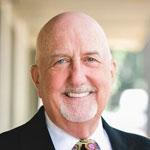
As adhesives and cements continue to evolve, change, and improve, it becomes more difficult for restorative dentists to keep up with the latest advances. With increasingly higher patient expectations for long term clinical success, it is important that dentists have an understanding of these materials in order to make sound decisions on what to use when and why. This CE webinar will discuss the different generations of adhesives and categories of cements including those with bioactive properties. Clinical cases will be shown to demonstrate the use of these adhesives and cements including the proper protocols that must be followed.
Periodontal disease is no longer understood as a condition driven by biofilm alone. Emerging evidence continues to highlight the role of airway dysfunction, altered breathing patterns, and chronic inflammation as contributing risk factors to periodontal breakdown. This two-part CE webinar series explores the airway-inflammation-periodontal connection through a prevention-focused, hygiene-centered lens. Participants will learn how mouth breathing and sleep-disordered breathing influence the oral microbiome, salivary function, and inflammatory burden, and how these changes present clinically during routine hygiene visits. Dental hygienists will gain practical tools for recognizing airway-related red flags, implementing simple screening strategies within their scope, communicating findings confidently with patients, and integrating prevention-based periodontal care models that support long-term stability.
The science and technology built into dental composite resins is impressive, but rarely do practitioners (or patients) realize how versatile our materials really can be. Direct placement is the most common approach for composite, but by relying on the material science within, predictable indirect composite restorations can also be life-like, strong and long lasting. Join the co-presenters in this CE webinar as they review cases from North and South America as they compare and contrast uses of composite resin in their daily practice.
Featured Podcast Episodes
 Series: DMG America
CE Credits: 0.5
Series: DMG America
CE Credits: 0.5
Guest: Dr. Julia Latham
|
Today we'll be discussing the benefits of 3D printing, and how it simplifies office workflow, increases efficiency, and allows dentists to provide the highest quality care to their patients. We will also detail the different applications 3D printing can be used for, as well as the specific steps involved. Our guest is Dr. Julia Latham, a general dentist and partner in a 5-doctor, 16-operatory practice in Stratford, Connecticut. She has completed many postdoctoral courses in orthodontics and is an Invisalign platinum provider.
 Series: VOCO America
CE Credits: 0.5
Series: VOCO America
CE Credits: 0.5
Guest: Dr. Marvin Chacon
|
Whether due to insufficient bone, medical contraindications, financial constraints, or patient preferences, single-tooth implants aren’t the solution for every case. That’s where fiber-reinforced bridges come in. To tell us all about the wonders of fiber-reinforced bridges is our guest, Dr. Marvin Chacon. With over 15 years of clinical dentistry experience, he obtained his Master's in Aesthetic Dentistry from King's College London in 2022. As a clinical trainer and speaker, he focuses on modern dental materials and innovative techniques under the "minimum Intervention" approach.
 Series: Bisco
CE Credits: 0.5
Series: Bisco
CE Credits: 0.5
Guest: Dr. Carla Cohn
|
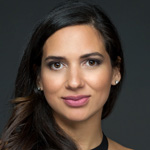
From protective liners and indirect pulp caps that help shield the pulp from further damage, to direct pulp caps aimed at maintaining vitality, to pulpotomies and pulpectomies when deeper intervention is necessary—each approach plays a key role in managing pulpal health. So, how do we determine the best course of action? To tell us all about it is our guest is Dr. Carla Cohn. She is a general dentist, devoted solely to the practice of dentistry for children. She owns and operates Kids Sleep Dentistry Winnipeg, a private practice at Western Surgery Centre in Canada. Dr. Cohn has recently founded Lit Smile Academy, a continuing dental education company. With extensive teaching experience and numerous publications, she is recognized internationally for her contributions to continuing dental education.






 The ABC’s of Adhesive Bonding and Cementation